Jules Schmalzigaug Antwerp, Belgium, 1882-1917
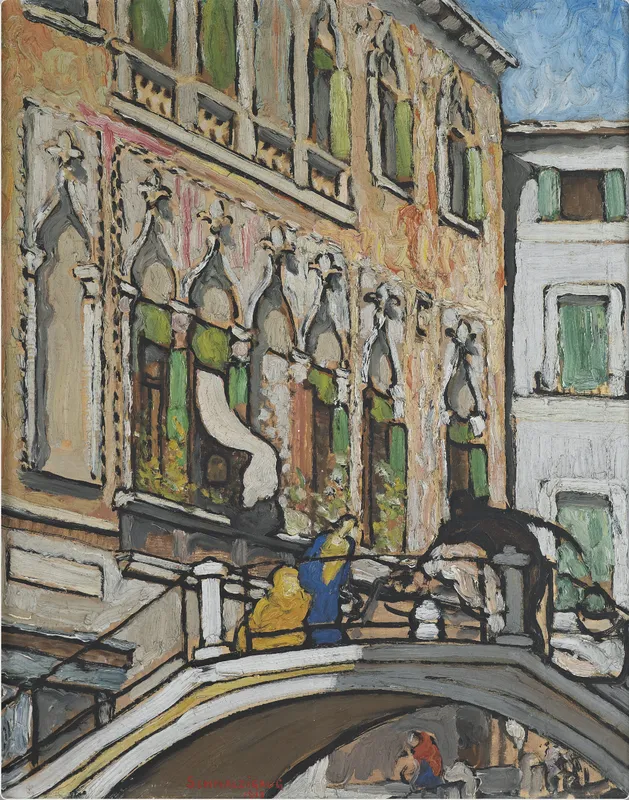
Jules Schmalzigaug (1882–1917) was a Belgian painter and one of the most original representatives of Futurism in Belgium. Born into a German family established in Antwerp, he travelled extensively from a young age. A journey through Italy in 1905–1906 made a lasting impression on him, particularly the light, colour and atmosphere of Venice.
Between 1910 and 1912, Schmalzigaug lived mainly in Paris, where he came into contact with the latest developments in European avant-garde art. After encountering the Italian Futurists in Paris in 1912, he moved to Italy, where he developed his most significant body of work. His interest in movement, light and the dynamism of modern life led his painting increasingly towards abstraction.
Schmalzigaug participated in the international exhibition of Futurism in Rome in 1914, placing him within the broader European avant-garde of the period. After the outbreak of the First World War, he returned to Antwerp and later moved to The Hague, where he continued to paint. His increasingly isolated existence affected his work and state of mind, and he died by suicide in 1917.
Despite his short career, Schmalzigaug occupies a distinctive place in Belgian modernism. His Futurist works, developed during his years in Italy, represent an important moment in the emergence of abstraction within Belgian art.


